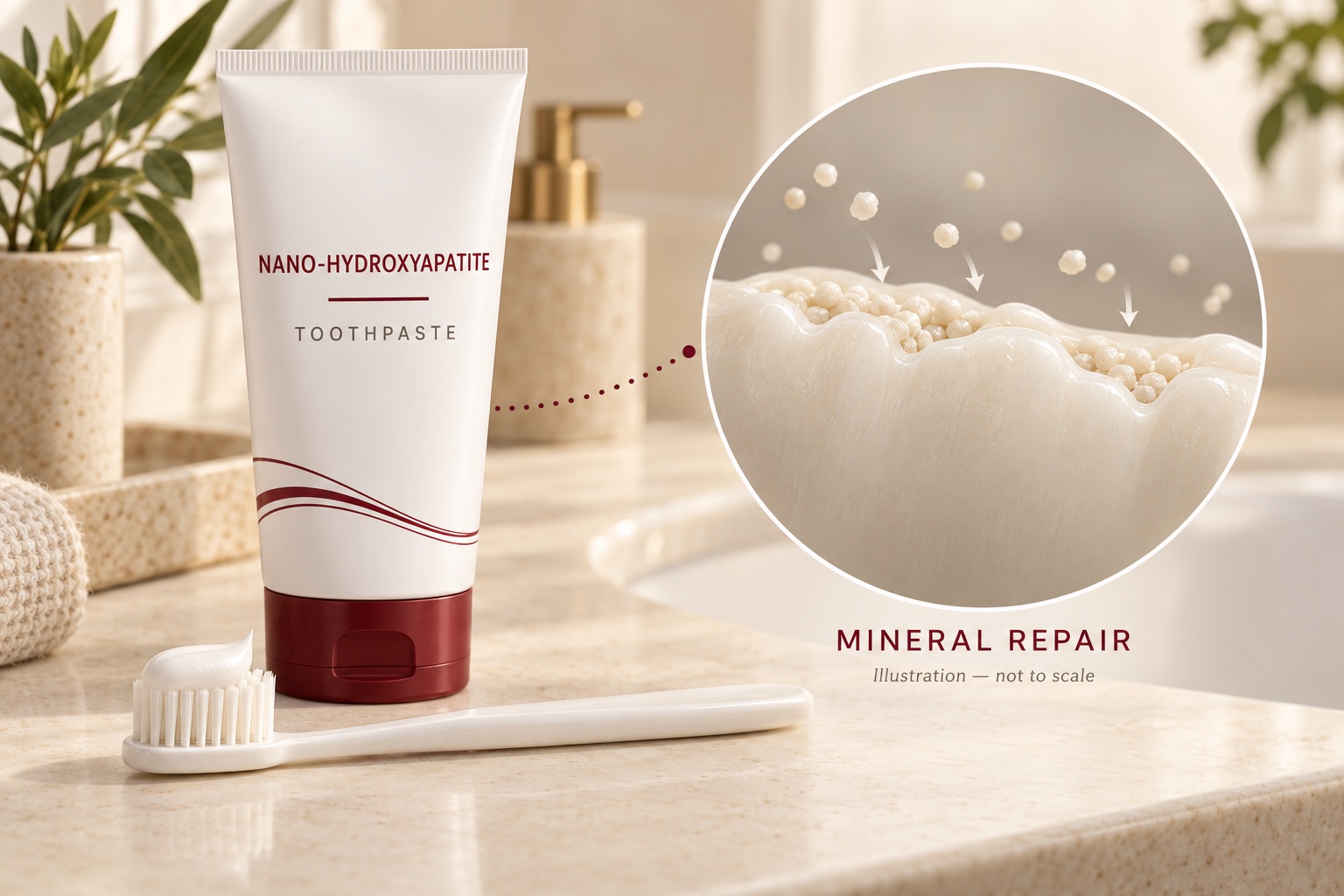
Buying toothpaste used to mean choosing a flavor. Now it can feel like choosing a chemistry major. One tube promises enamel repair, another says fluoride-free, and suddenly you are standing in the aisle trying to pronounce hydroxyapatite.
The ingredient deserves a closer look. So do the promises around it. Here is what matters before you change the tube next to your sink.
I’m still using fluoride
I still use fluoride toothpaste. I either buy a toothpaste that combines fluoride and nano-hydroxyapatite, or keep two separate toothpastes in my routine: one with fluoride and one with hydroxyapatite.
One I love that combines the two is CariFree Gel 1100 Toothpaste with Nano-Hydroxyapatite. CariFree lists both fluoride and nano-hydroxyapatite in this formula, so I can have both in one tube.
That is my personal preference, not a claim that using two toothpastes—or a combination formula—has been proved better than fluoride toothpaste alone. Follow each product’s directions and ask your dentist how to fit a second toothpaste into your routine while keeping the fluoride protection you need.
What is nano-hydroxyapatite?
Hydroxyapatite is a calcium-phosphate mineral. Your teeth already contain a biological form of it. The version used in oral-care products is intended to interact with tooth surfaces because its chemistry resembles tooth mineral.
“Nano” describes the very small size of the particles. You may see the ingredient shortened to nHA, nano-HAP, or nano-hydroxyapatite. Those are names for the ingredient, not separate benefits.
The idea is to put tiny mineral particles where they might support mineral deposits on teeth or help cover exposed dentin—the sensitive layer beneath enamel. Researchers are investigating both uses. Nano-hydroxyapatite research and proposed mechanisms.
One useful distinction: a toothpaste that says “hydroxyapatite” is not automatically a nano formula. Studies may use different particle sizes, concentrations, and additional ingredients. Research on one formula does not certify every tube with the same mineral on the front.
“Repairing enamel” needs a little translation
Teeth lose and regain minerals throughout the day. Acids made by plaque bacteria can remove minerals from enamel. Saliva helps supply minerals back, and fluoride supports that repair process.
Remineralization means replacing minerals in an early weakened area. It is possible while enough of the tooth structure remains. Once decay has created an actual hole, toothpaste cannot rebuild the missing tooth into its original shape. NIDCR explains early decay versus a cavity.
That is why “helps remineralize” and “regrows your enamel” should not be read as the same promise. The first can describe a measurable mineral change. The second can make it sound as though a tube of toothpaste does the work of a filling.
My rule for reading the label: ask what “repair” means. Fewer cavities in people? Less sensitivity? A harder surface in a laboratory sample? All three are worth studying, but they answer different questions.
What would enamel restoration actually look like?
A before-and-after smile photo cannot tell you whether enamel has gained minerals. Lighting, stain removal, and whitening can all change how teeth look. A brighter smile and a stronger tooth surface are different outcomes, so I would want a company to explain which one it measured.
Think about three situations: an early weakened area that a dentist is monitoring, a tooth that reacts to cold, and a visible hole. Those can all send someone shopping for “enamel repair,” but they should not lead to the same expectations. Early mineral loss may be reversible; sensitivity needs its cause identified; a cavity needs dental treatment.
A useful question at a checkup is, “When you say this area is weakened, is there still a surface we can remineralize?” That turns a vague promise about restoration into a conversation about your actual tooth. NIDCR explains the stages of decay.
Can it help sensitive teeth?
There is encouraging evidence for some nano-hydroxyapatite toothpastes. In an eight-week randomized trial published in 2021, several nano-HAP formulas reduced sensitivity to cold and air. Some performed similarly to the comparison sensitivity toothpaste. The research involved specific formulations, and it was funded by a toothpaste manufacturer. Read the sensitivity trial.
The proposed explanation is fairly simple: exposed dentin contains tiny channels, and mineral deposits can help block them. But sensitivity is a symptom with several possible causes, including a cracked tooth, decay, gum recession, or worn enamel. A toothpaste cannot tell you which one you have. ADA guide to sensitive teeth.
If a cold drink makes you wince, this ingredient is reasonable to ask your dentist about. If one tooth suddenly hurts, the pain lingers, or the problem keeps returning, book an assessment instead of repeatedly buying another sensitivity product.
How long before you know whether it helps?
There is no universal countdown to restored enamel. The eight-week sensitivity trial measured responses to cold and air over time; it did not establish that everybody regrows enamel in eight weeks. Desensitizing toothpaste generally needs repeated use before relief, according to the ADA. What to expect from sensitivity treatment.
If your dentist suggests trying a sensitivity toothpaste, agree on what improvement should look like and when to check back. “My usual cold drink is more comfortable” is a useful observation to report. It is not a diagnosis or proof that a cavity has healed.
I would also avoid changing several oral-care products at once. As a practical way to evaluate a purchase, keeping track of what changed makes it easier to explain your experience. Note the product name, when you started it, and whether symptoms improved, stayed the same, or worsened.
Can it prevent cavities as well as fluoride?
Some hydroxyapatite research is promising. An 18-month randomized trial published in 2023 compared a fluoride-free hydroxyapatite toothpaste with a toothpaste containing 1,450 ppm fluoride in adults.
Among the 171 people who completed the study as planned, about 89% in the hydroxyapatite group and 87% in the fluoride group had no increase in the study’s measure of decayed, missing, or filled tooth surfaces. The hydroxyapatite formula met the study’s definition of being no worse than the comparison by more than an allowed margin. Read the adult cavity-prevention trial.
That is encouraging, but it is not proof of superiority. The allowed margin was 20 percentage points; “non-inferior” does not mean the products were proved identical. The trial also had manufacturer funding and manufacturer-employed authors.
Most importantly for this article, this was evidence about the tested hydroxyapatite formula—not proof that every nano-hydroxyapatite toothpaste is equivalent to fluoride.
Fluoride remains the established default. The American Dental Association recommends fluoride toothpaste with its Seal of Acceptance. Fluoride has a much broader history of evidence and routine use for cavity prevention. ADA fluoride guidance.
Is the “nano” part safe?
Tiny does not automatically mean dangerous, and “similar to something in your body” does not automatically mean safe. The actual material and how it is used matter.
In its final 2025 opinion, the European Commission’s Scientific Committee on Consumer Safety considered the submitted nano-hydroxyapatite material safe at concentrations up to 29.5% in toothpaste and 10% in mouthwash.
That conclusion was specific to the evaluated particle specifications, including shape, size, and lack of coating or surface modification. It did not apply to material containing needle-shaped particles. It is a safety assessment of specified material, not a blanket endorsement of every product or a finding that a higher percentage works better. Read the SCCS safety conclusion and conditions.
For a shopper, the useful question is whether the company can explain what material it uses and which safety assessment applies. “Nano is bad” and “it is totally harmless because it is natural” both skip the details you actually need.
Can you use nano-hydroxyapatite and fluoride together?
Yes—some toothpastes are formulated with both, including the CariFree Gel 1100 I use. You do not have to choose a fluoride-free product to try hydroxyapatite. That is the distinction I wish were clearer in the toothpaste aisle. CariFree’s formula and ingredients.
A finished combination toothpaste is also different from making your own mixture from two tubes. Research on a commercial formula does not tell us what happens with every homemade combination, sequence, or amount. My mention of two separate toothpastes describes what I keep in my routine; it is not a recipe for mixing them together.
If you prefer separate products, bring both labels to your dentist and ask how to use them without losing the fluoride routine they recommend. There is no need to invent an elaborate schedule based on social-media instructions.
A closer look at the CariFree toothpaste I love
For the combination version, look for Gel 1100 Toothpaste with Nano-Hydroxyapatite. CariFree also sells a fluoride-free gel, so the brand name alone does not identify which formula you are buying.
The Gel 1100 ingredient list names 0.24% sodium fluoride, and the manufacturer describes it as providing 1,100 ppm fluoride. Those numbers express different things: the percentage of the sodium fluoride compound and the fluoride concentration in parts per million.
CariFree does not disclose its exact nano-hydroxyapatite percentage on the product page. I would not guess that number or treat an ingredient’s position on the list as a substitute for it. Check the current CariFree label and formulation FAQ.
What I can honestly say is that this is one I love and that it combines the two ingredients I want in my routine. That personal recommendation is separate from proving that it outperforms another toothpaste in a clinical trial.
What I would look for on a toothpaste label
You do not need to read every paper before brushing your teeth. I would start with these questions:
- Does it contain fluoride? A hydroxyapatite claim alone does not answer that. Check the ingredient list and, on U.S. anticavity toothpaste, the Drug Facts panel.
- What benefit is supported? A sensitivity study does not automatically support a cavity-prevention claim.
- Was this formula studied? Ask for the product, concentration, and type of hydroxyapatite used in the research—not just a page of studies about the ingredient.
- Is the company clear about the formulation? A disclosed percentage is useful information, but a bigger number is not a proven quality ranking.
- Does it make sensible promises? I would pass on claims that toothpaste fills cavities, replaces dental appointments, or guarantees enamel regrowth.
For a U.S. toothpaste to earn the ADA Seal for cavity-prevention claims, it must contain fluoride. That does not mean every product without the Seal is unsafe; it does mean a fluoride-free product should not be presented as having that same anticavity endorsement. ADA toothpaste requirements.
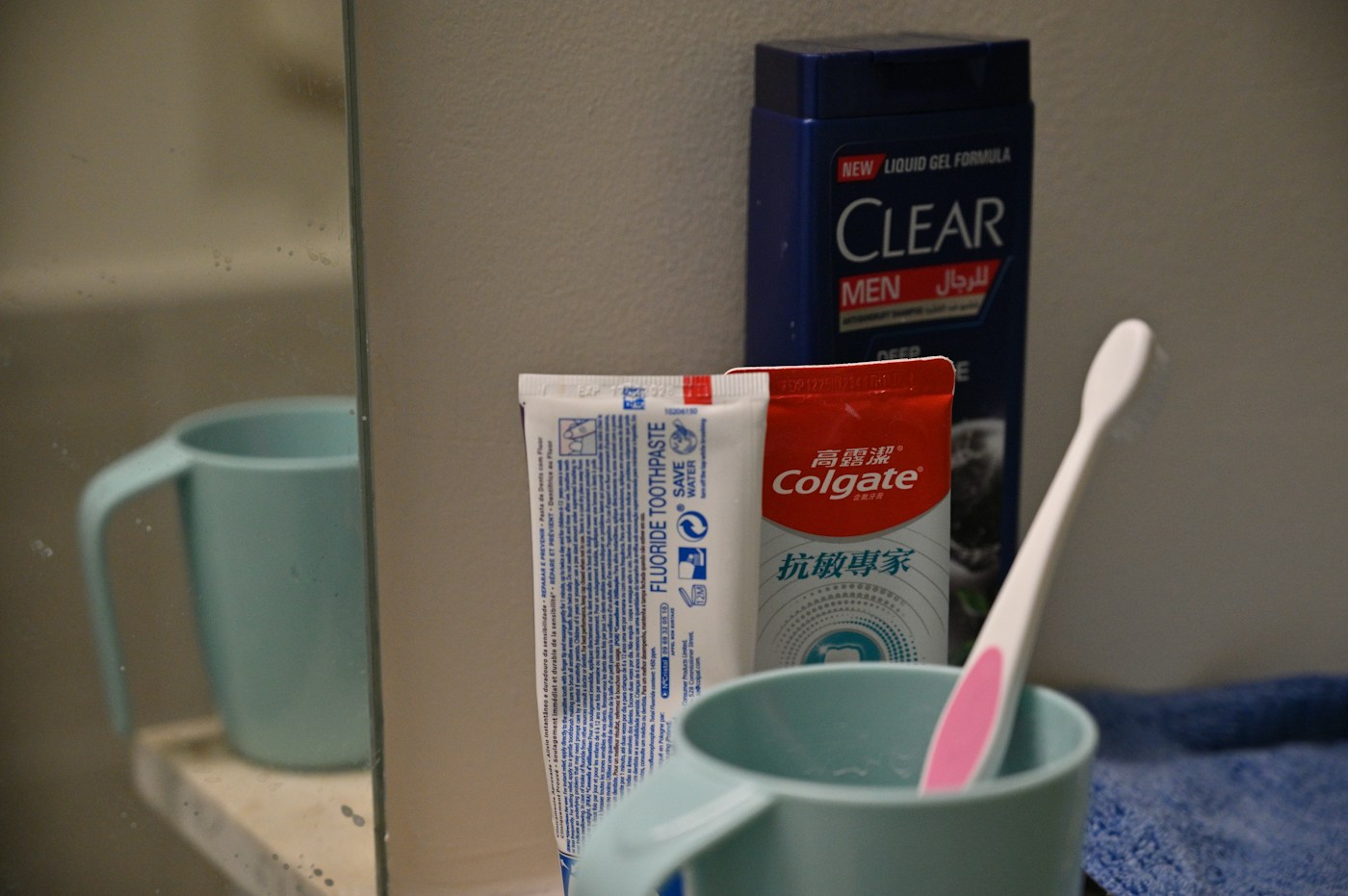
The photographs here show ordinary dental-care products and toothbrushes. They are not examples of verified nano-hydroxyapatite formulas or product recommendations.
Should you switch?
If your current fluoride toothpaste works for you, there is no clear reason to replace it just because nano-hydroxyapatite is getting attention. Interesting research is a reason to stay curious, not a requirement to overhaul a good routine.
If you are interested because of sensitivity, bring the exact product to your dentist. If you want to avoid fluoride, talk through how the alternative fits your cavity risk instead of assuming all mineral toothpastes offer the same protection.
For children, ask their dentist about an age-appropriate toothpaste and amount. Do not treat a general ingredient safety assessment as instructions for a child’s dental routine. And if you have been prescribed a high-fluoride toothpaste, discuss any replacement with the person who prescribed it.
A useful appointment question is: “Given my teeth and cavity history, what would I gain or lose by switching to this formula?” A photo of the full label makes that conversation much more helpful than the word “nano” alone.
The habits still do most of the daily work
Brush twice daily, clean between your teeth, and keep regular dental appointments. Frequent sugary drinks and snacks give decay-causing bacteria more opportunities to make acids; no special ingredient cancels that out. NIDCR dental-care guidance.
Persistent toothache deserves dental care. Facial swelling or fever with tooth symptoms needs prompt attention, rather than a toothpaste experiment. NIDCR symptoms of advancing decay.
My take: I’m keeping fluoride in my routine, and I like having hydroxyapatite as an option alongside it. CariFree’s combination toothpaste is one I love. The research is worth following, but I still want the exact formula and my own dental needs to guide the choice.
*For education only; not personalized dental advice. Research checked September 13, 2026.*
Sources
- CariFree Gel 1100 Toothpaste with Nano-Hydroxyapatite
- Nano-hydroxyapatite research and proposed mechanisms
- NIDCR explains early decay versus a cavity
- NIDCR explains the stages of decay
- Read the sensitivity trial
- ADA guide to sensitive teeth
- What to expect from sensitivity treatment
- Read the adult cavity-prevention trial
- ADA fluoride guidance
- Read the SCCS safety conclusion and conditions
- CariFree’s formula and ingredients
- Check the current CariFree label and formulation FAQ
- ADA toothpaste requirements
- NIDCR dental-care guidance
- NIDCR symptoms of advancing decay