The short answer
Some dogs meet an irresistible outdoor smell, drop one shoulder, and wriggle across it with total commitment. Thanks! Social Club turned that wonderfully strange behavior into Wriggle Dance Spray, a Korean-made scent mist for mats and toys. The idea is genuinely clever: bring a dog-interesting, earthworm-derived scent indoors and let the dog decide whether to sniff, rub, roll, or walk away.
There is a moment dog people know immediately: a dog catches an intriguing smell, lowers a cheek or shoulder, and commits to a joyous full-body roll. The exact reason dogs scent-roll is still debated. They may be collecting a novel odor, communicating about it, or simply enjoying the sensory experience. Wriggle Dance Spray takes that odd little instinct seriously.
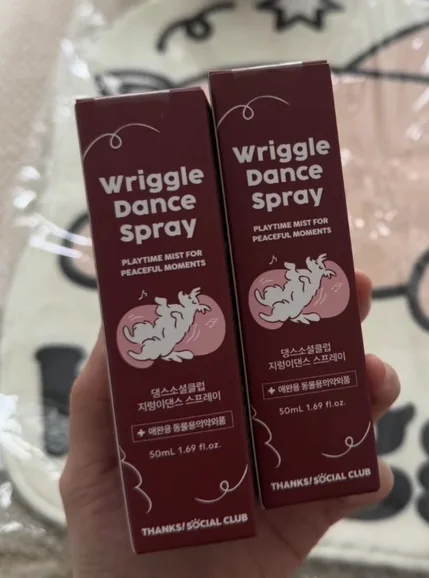
The product comes from South Korea’s Thanks! Social Club. Its packaging calls it a “playtime mist for peaceful moments,” while the manufacturer’s directions frame it as an object-based scent activity. The 50 mL liquid is sprayed on a mat, toy, blanket, or other familiar dog area so the dog can investigate it.
What is Wriggle Dance Spray?
Wriggle Dance Spray—also translated by the brand as Worm Dance Spray—is a liquid dog play mist inspired by the way some dogs roll on the smell of dried earthworms or earthworm-worked soil. The manufacturer says its signature material is earthworm-derived and made in powder form. The formal English ingredient panel calls that material “Earthworm Conditioned Soil.”
That wording matters. The listing does not say the bottle contains whole earthworms, and it does not publish the percentage, species, extraction process, or chemical identity of the scent compounds. The most accurate description is the label’s own: an earthworm-conditioned-soil ingredient suspended in a water-based formula.
The international store currently sells a two-bottle pack for $55, marked down from $60. Each bottle contains 50 mL, or 1.69 fluid ounces. The maker lists a 36-month shelf life from manufacture and storage in a tightly closed container at 1–30°C, away from direct sunlight.
What is it made of?
The manufacturer publishes this complete ingredient list:
- Purified water
- Earthworm conditioned soil
- PEG-40 hydrogenated castor oil
- Glycerin
- Sodium benzoate
- Caprylyl glycol
- Chlorphenesin
- Dexpanthenol
- Trehalose
- Glycine
- Cyclodextrin
- Chlorhexidine digluconate
- Disodium EDTA
- Hinoki cypress water
- Butylene glycol
- 1,2-hexanediol
- White willow bark extract
In practical formula terms, purified water is the base and earthworm conditioned soil is the distinctive scent material. PEG-40 hydrogenated castor oil and cyclodextrin help a water-based product carry and disperse other materials. Glycerin, butylene glycol, dexpanthenol, trehalose, and glycine are commonly used for moisture retention or skin conditioning. Sodium benzoate, caprylyl glycol, chlorphenesin, chlorhexidine digluconate, 1,2-hexanediol, and disodium EDTA help preserve or stabilize formulas. Hinoki cypress water and white willow bark extract are the botanical components. Those are common formulation roles, not proof that every ingredient has only one job or that the finished spray produces a medical effect.
The product panel lists “helps moisturize your dog’s skin” under efficacy and effects. That is the registered product claim shown by the maker; it is not evidence that the spray treats dry skin, dermatitis, infection, or any other skin condition.
What does it do to dogs?
At the simplest level, it puts a novel, earthy odor on an object. A dog may orient toward it, sniff repeatedly, rub a cheek or shoulder, roll across the surface, paw at it, or return later. The manufacturer even acknowledges that shy or timid dogs may not show an outward “dance reaction.” No visible reaction does not mean the dog failed.
That response is not the same as sedation. The spray is not described as a pheromone, and the formula does not list a prescription anti-anxiety medication. Its immediate action is sensory and behavioral: it gives the dog something unusual to investigate.
The larger idea—giving dogs opportunities to use their noses—has credible support. In a small 2019 study of 20 pet dogs, two weeks of nosework was associated with a more positive judgment bias than heelwork. The researchers argued that olfactory activity lets dogs perform a natural behavior and make choices. Veterinary enrichment guidance similarly encourages sniffing, seeking, and species-typical exploration.
But that research did not test Wriggle Dance Spray, earthworm conditioned soil, or separation anxiety. Olfactory-enrichment studies also show that different scents can produce different responses. A dog’s interest in this particular odor is an individual result, not a guaranteed calming mechanism.
Will it help separation anxiety, travel stress, or fear of noise?
The brand’s product page suggests using the spray around time alone, travel, visitors, loud noise, training, and sleep. Those are marketing suggestions. I found no published controlled study showing that Wriggle Dance Spray treats separation anxiety, noise aversion, motion-related distress, or insomnia in dogs.
A dog with true separation-related distress may pace, pant, vocalize, drool, destroy exit points, eliminate indoors, refuse food, or injure themselves while trying to escape. Veterinary behavior guidance treats that as more than boredom. A real plan may involve video assessment, gradual desensitization, predictable routines, environmental management, behavior modification, and medication prescribed by a veterinarian when appropriate.
The spray can be one low-stakes enrichment item inside that plan if the dog enjoys it. It should not be the plan.
How to use it
The manufacturer’s directions are refreshingly simple:
1. Shake the bottle well.
2. Spray 3 to 5 times on a chosen mat, toy, blanket, or dog area.
3. Invite the dog to explore without forcing contact.
4. Praise relaxed sniffing, rubbing, or rolling.
5. If using it before an outing or travel, the maker suggests applying it about 15 minutes beforehand.
Start with less than the maximum in a ventilated room, especially for a scent-sensitive dog. A washable mat or blanket is the easiest first surface. Adjust the amount and spraying distance if the odor feels strong, and follow the maker’s advice to avoid leather and metal.
Choice is part of good enrichment. Put the treated item down, leave the dog room to move away, and watch body language. Loose movement, voluntary re-approach, soft eyes, and relaxed exploration are different from freezing, lip licking, frantic scratching, sneezing, coughing, or trying to escape.
Safety details worth reading
Use the product for dogs only. The brand’s FAQ specifically says it is not recommended for cats. The safest reading of the directions is to spray objects rather than mist the dog’s face or coat directly.
The maker says not to use it on wounds, eczema, dermatitis, mucous membranes, eyes, nose, mouth, or genitals. Stop immediately if redness, swelling, or itching occurs. Keep the bottle itself away from children and animals, close the cap after use, and store it away from temperature extremes and sunlight.
Because the formula contains more than water and an earthy scent—including chlorhexidine digluconate, preservatives, glycols, and botanical materials—“naturally derived” should not be read as universally risk-free. The brand shows a heavy-metal screening report and manufacturing credentials, but those do not establish that every dog will tolerate the product or that swallowing it is safe. Supervise the first uses, do not let a dog chew or suck on a wet treated item, and contact a veterinarian with the ingredient list if the product reaches the eyes or mouth, is swallowed in quantity, or triggers a reaction.
Why this is such a cool product
Most pet fragrance products are designed for the human nose: make the dog, room, or bedding smell cleaner to us. Wriggle Dance Spray flips the point of view. It asks what smell might be interesting to the dog and turns that answer into a clean, portable play ritual.
That is a small but meaningful design choice. Good enrichment does not have to look impressive to people. It needs to be safe, voluntary, and relevant to the animal using it. A dedicated mat, three cautious sprays, and permission to do a ridiculous shoulder-first wiggle can be enough.
The earthworm idea is also funny in exactly the right way. It does not sand off the strange parts of living with a dog. It celebrates them.
Everyday Edited takeaway
Wriggle Dance Spray is a creative scent-enrichment product with an unusually transparent ingredient list and a delightful dog-first premise. Use it on a washable object, introduce it gradually, and let the dog vote with their body language. If they sniff and roll, you have a new indoor game. If they walk away, that is useful information too.
Buy it for the sensory play—not as a promise to cure anxiety. The coolest thing about it is not that it guarantees a peaceful dog. It is that someone noticed a deeply weird, deeply normal dog behavior and designed a product around the dog’s experience.
Sources
- Thanks! Social Club: Wriggle Dance Spray product page, formula, directions, and cautions
- Applied Animal Behaviour Science: “Let me sniff! Nosework induces positive judgment bias in pet dogs”
- Animals: Effects of olfactory and auditory enrichment on shelter-dog behavior
- AAHA: Separation anxiety in pets
- American Kennel Club: Why dogs roll in strong-smelling material
Pet safety note: This article is general product information, not veterinary advice. A dog with persistent fear, panic, self-injury, sudden behavior change, skin disease, or respiratory sensitivity needs individualized guidance from a veterinarian.
What actually helps
- Use a washable mat or blanket as the dedicated scent surface.
- Start with a small amount in a ventilated room and let the dog approach voluntarily.
- Watch the whole dog: relaxed curiosity is the goal, not a dramatic roll.
- Stop if you see coughing, sneezing, redness, swelling, itching, freezing, or avoidance.
- Treat separation-related distress as a veterinary behavior concern, not a product-shopping problem.
Best for
Dogs that enjoy sniffing, scent games, novelty, and rolling on soft surfaces—and people who want a quick indoor enrichment ritual.
Skip if
Your dog has irritated skin, respiratory sensitivity, strong fragrance aversion, or a habit of swallowing sprayed materials; the manufacturer also says not to use it for cats.
Products worth considering
Thanks! Social Club
Wriggle Dance Spray — 50 mL
A very dog-specific Korean play mist: shake it, spray 3 to 5 times on a washable mat or toy, and let the dog choose whether to sniff, rub, or roll.
Best for: Dogs that enjoy novel smells, scent games, and rolling on mats or blankets.
Skip if: Your dog has irritated skin, fragrance sensitivity, respiratory concerns, or a history of licking and chewing sprayed objects; ask your veterinarian first.
View at Thanks! Social ClubFAQ
What is Wriggle Dance Spray?
It is a 50 mL Korean-made scent-enrichment mist for dogs. You spray it on a mat, toy, or blanket so the dog can choose to sniff, rub, or roll.
Does Wriggle Dance Spray contain earthworms?
The formal ingredient list says “Earthworm Conditioned Soil,” and the maker calls its signature material earthworm-derived. The listing does not disclose a percentage, earthworm species, or extraction method, so it should not be described as whole earthworms.
Does it calm dogs or treat separation anxiety?
It may provide an interesting sniffing routine for some dogs, but no published clinical trial of this specific spray was found. It is not a substitute for veterinary assessment or a behavior plan for separation-related distress.
How do you use Wriggle Dance Spray?
Shake it, spray 3 to 5 times on a mat, toy, or blanket, and allow the dog to explore voluntarily. Start with less for a scent-sensitive dog and avoid the face, mouth, eyes, wounds, and irritated skin.
Can cats use Wriggle Dance Spray?
No. The manufacturer says the current formula is designed only for dogs and does not recommend using it for cats.
Related reads
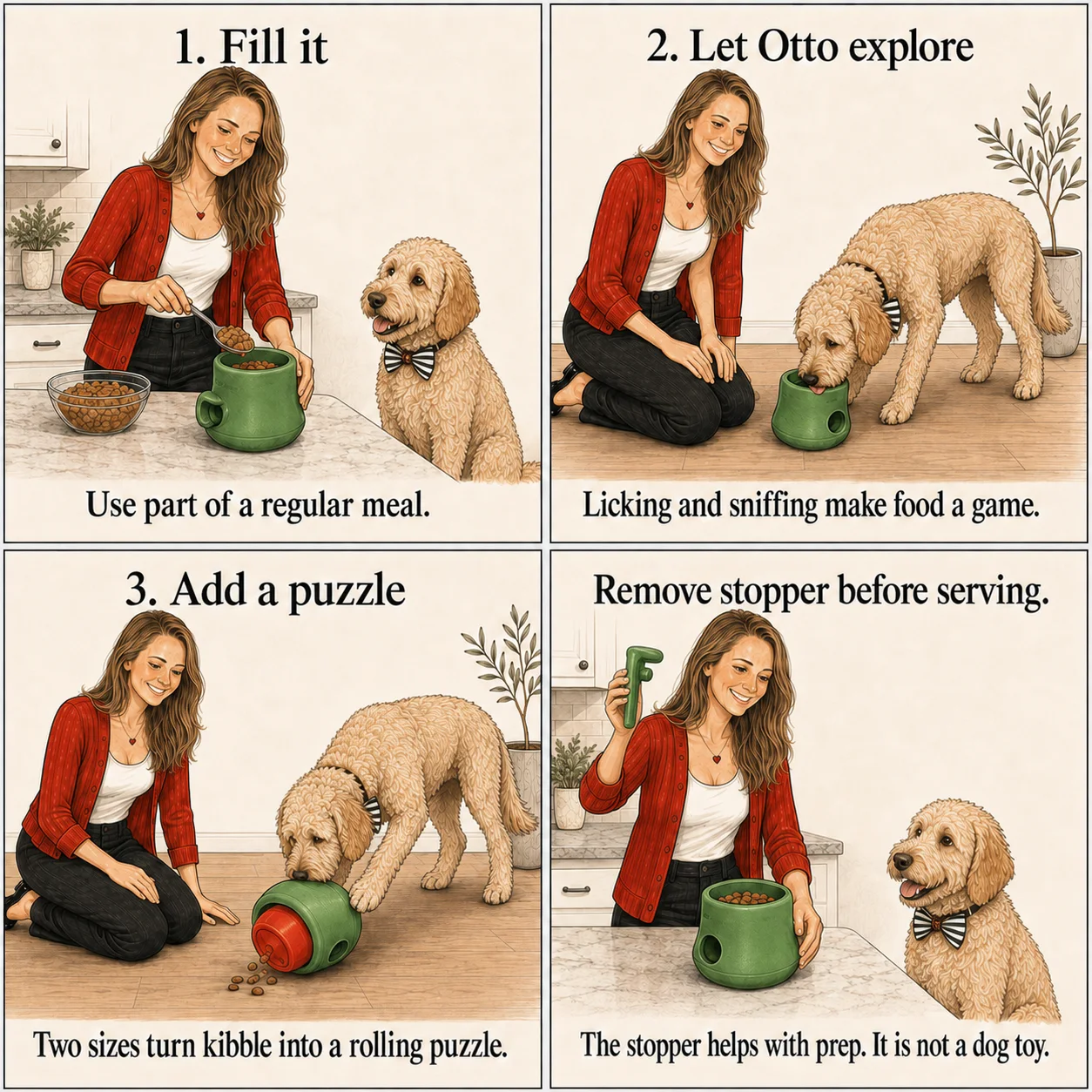
Turn Dinner Into a Dog Puzzle
Katie and Otto show how to fill a TOPPL, turn it into a rolling puzzle, and use the stopper safely.
Read article →One Thing Before You Go
Amazing animal fact
Two Weeks of Nosework Changed How Dogs Read Ambiguity
In a small 2019 study, 20 adult pet dogs practiced either nosework or heelwork with their people for two weeks. Afterward, dogs in the nosework group approached an ambiguous bowl more quickly in a cognitive-bias test; the researchers interpreted that change as a more positive judgment bias. They argued that using scent gives dogs a chance to perform a natural behavior and make active choices.
The study did not test Wriggle Dance Spray or show that any single odor calms every dog. Its useful lesson is broader: time spent exploring with the nose can be meaningful enrichment.
Why it’s fun to share: Set up a simple find-the-treat game and notice how much work your dog’s nose does before the paws ever move.