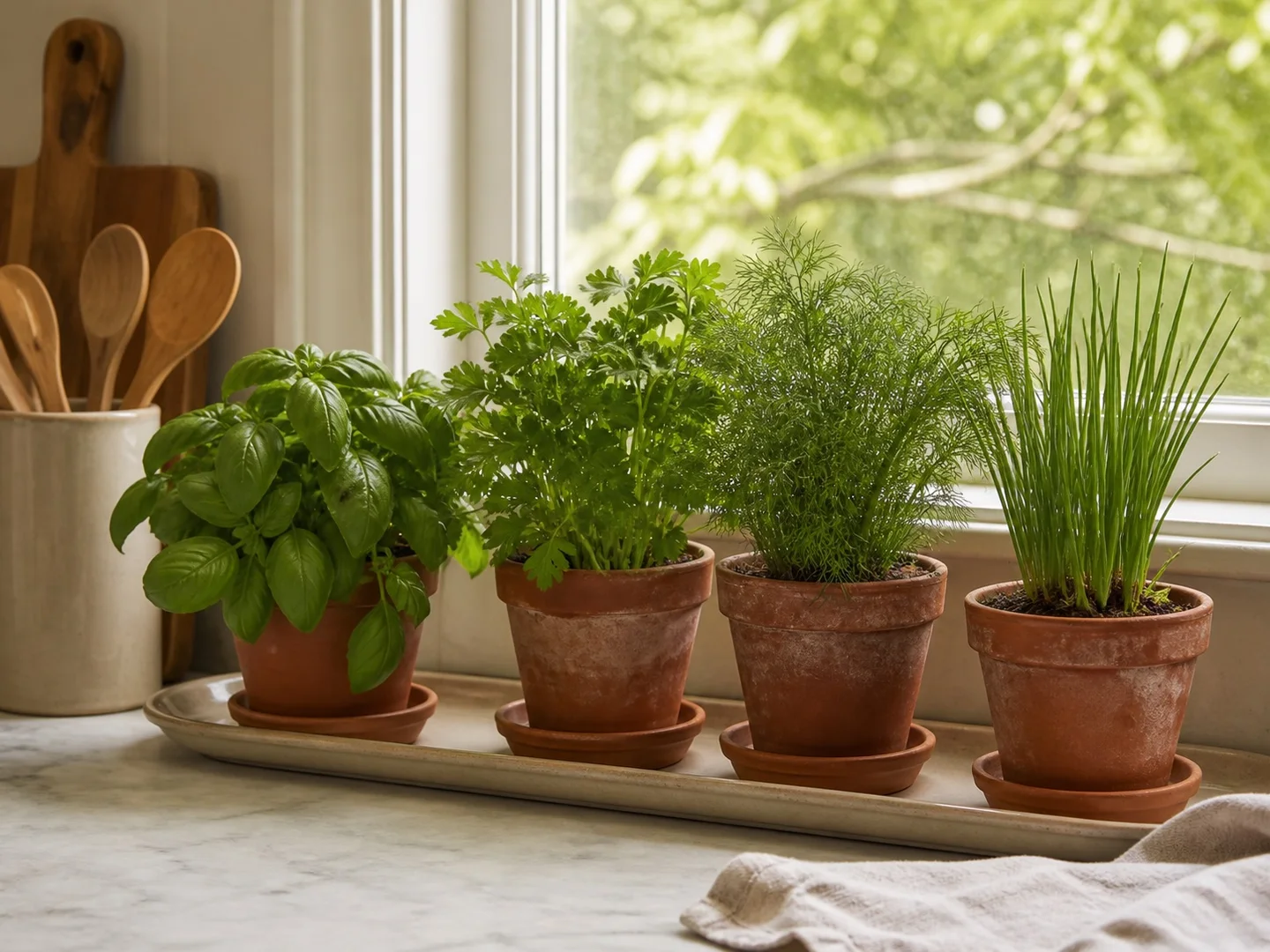
The short answer
Plant one herb in each pot, water until the excess drains, then group all four on a waterproof tray in your brightest window.
What you need
- Four 6- to 8-inch terracotta pots with drainage holes
- Four matching saucers and one waterproof tray
- Indoor potting mix—never dense garden soil
- Four small herb plants: basil, parsley, chives, and thyme
- A scoop or old measuring cup and a watering can
Step 1: Set up the pots
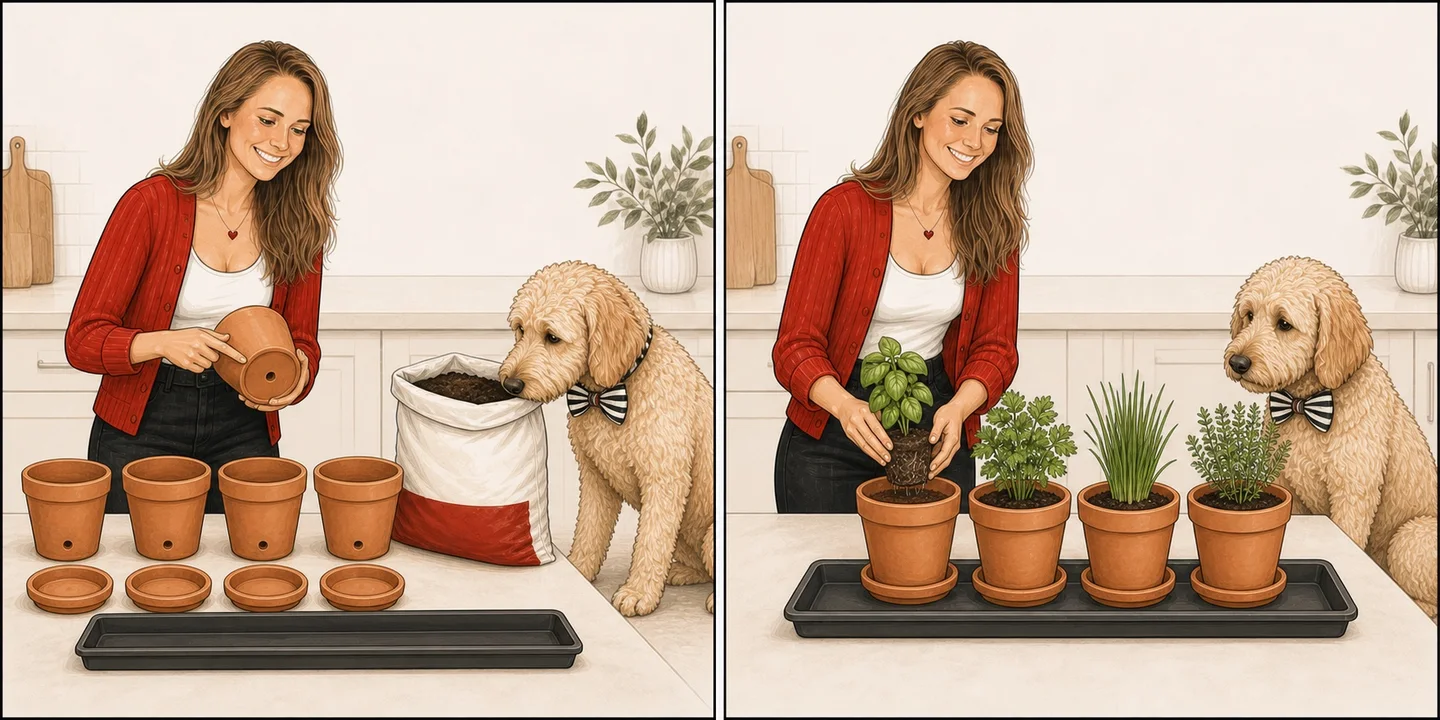
Check that every pot has an open drainage hole. Put each pot on its own saucer, then line them up on the tray so you know the finished garden fits your windowsill or counter.
Step 2: Plant one herb per pot
Add potting mix until each pot is about two-thirds full. Slide a herb from its nursery container, loosen circling roots gently, and set it in the center.
Fill around the root ball, keeping the herb at the same depth it grew before. Leave about an inch below the rim so water does not spill over. Press the mix lightly—do not pack it hard.
Step 3: Water in the sink
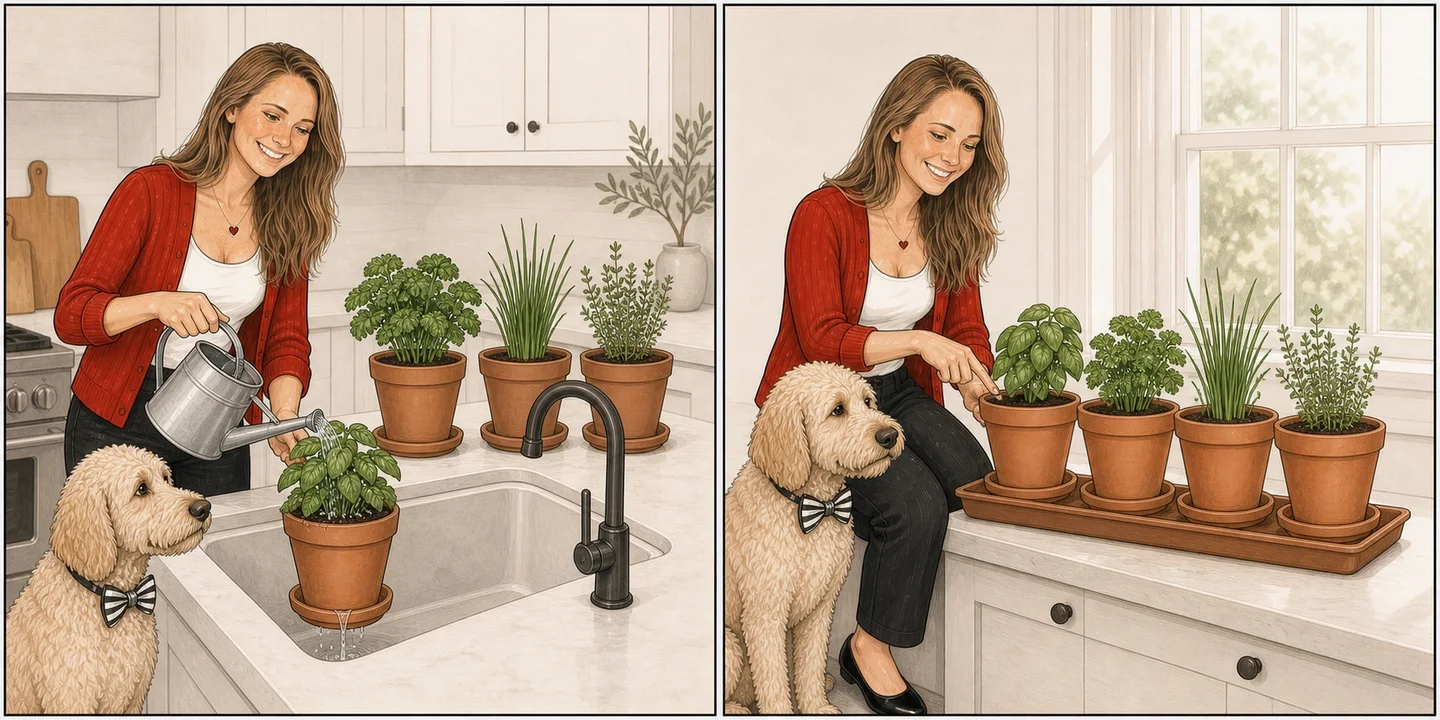
Move the pots to the sink and water slowly until you see excess water run from the bottom. Let each pot finish dripping before returning it to its saucer.
Empty any water that collects in the saucers. Herb roots need moisture, but they should not sit in a puddle.
Step 4: Put the tray in your brightest window
Group all four pots on the waterproof tray and give them as much direct light as you can—most indoor herbs grow best with about six hours. Rotate the tray regularly so the plants do not lean in one direction.
Keep basil away from cold winter glass. If the stems become pale, long, or floppy, the garden needs a brighter spot or a grow light.
Keep the four herbs alive
Water by touch
Push a finger about an inch into each pot. Water basil and parsley when the top feels dry; let thyme dry slightly more between waterings. Terracotta is porous, so these pots lose moisture faster than plastic ones.
Trim from the top
Snip small amounts often, just above a pair of leaves. Regular harvesting keeps the plants compact and useful; removing more than one-third at once can slow recovery.
The Everyday Edited takeaway
The useful little system is one herb per pot, one saucer per pot, and one tray underneath everything. You can lift out the thirsty plants, leave the drier ones alone, and move the whole garden when the light changes.
What actually helps
- Use pots with open drainage holes and empty the saucers after watering
- Plant one herb per pot so each can be watered separately
- Check the soil with a finger instead of following a fixed watering schedule
- Give the tray about six hours of direct light and rotate it regularly
Best for
A bright kitchen with room for a tray holding four 6- to 8-inch pots.
Skip if
Your only spot stays dim all day and you do not want to add a grow light. In a pet-accessible home, also skip chives or keep them completely out of reach.
FAQ
Do terracotta herb pots need drainage holes?
Yes. Each pot needs a hole in the bottom so excess water can escape. Use a saucer under every pot and empty standing water after the pot has drained.
How often should I water herbs in terracotta pots?
Check each pot instead of using one schedule. Water when the top inch feels dry, remembering that basil prefers more consistent moisture while thyme can dry slightly between waterings.
Can I put rocks in the bottom for drainage?
Skip the rocks. They reduce the room available for roots and can make drainage worse. Use quality potting mix and keep the drainage hole open.
Sources
Related reads

Turn Your Favorite Notes Into a Wall You Love
Turn five favorite notes into a meaningful gallery wall, with simple steps for copying, framing, arranging, and hanging.
Read article →
The Easy Picture Frame Key Holder DIY
Turn a wooden picture frame into a useful key holder with two small hooks and five easy steps.
Read article →