The short answer
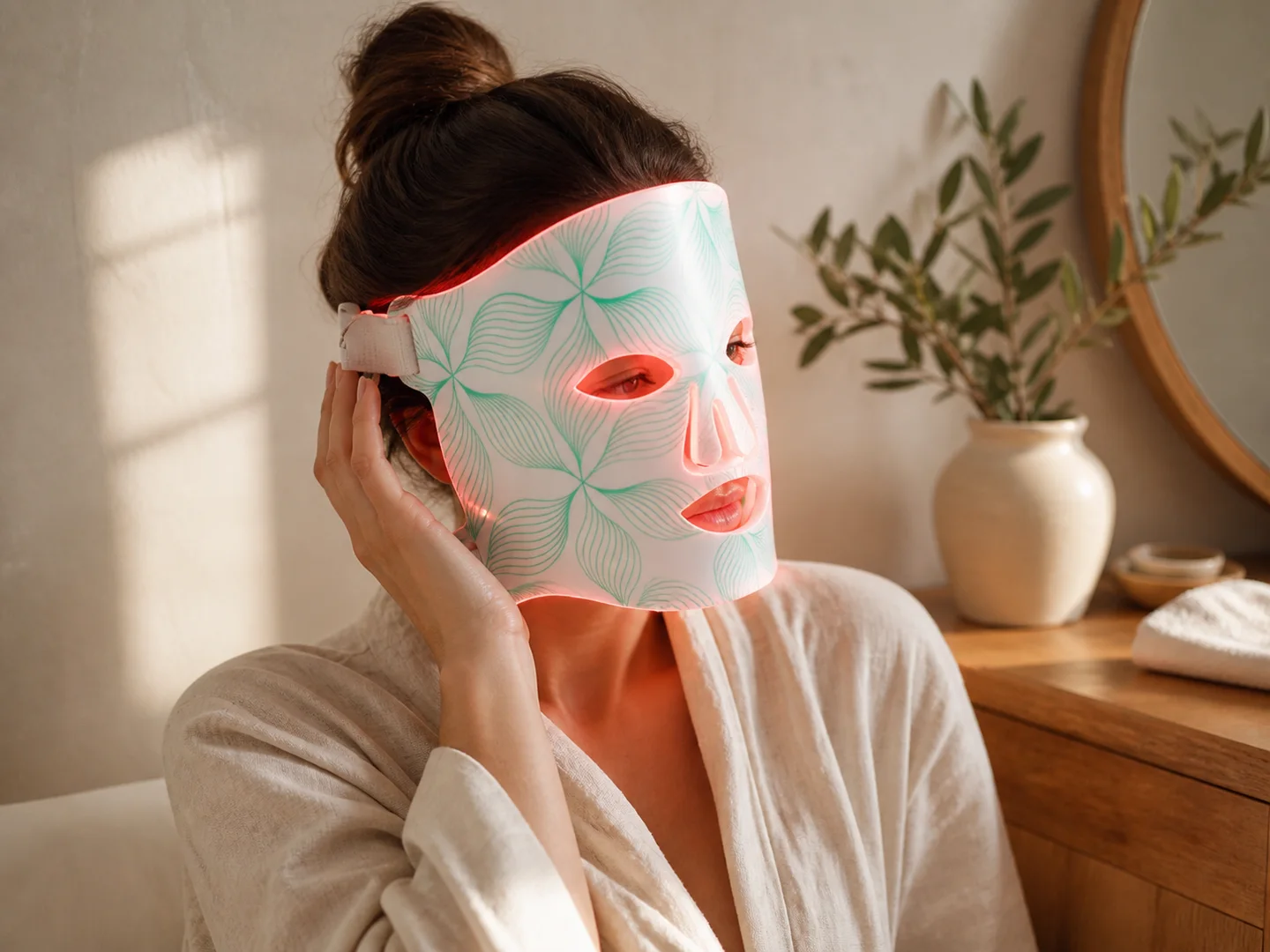
Choose by treatment area first. Contour Face is the straightforward full-face red and near-infrared option; Clear is the full-face blue-and-red acne device; Men adds a published 1072 nm near-infrared wavelength; the neck and glove devices fit specific body areas; and the three Minis cover small targeted areas.
Omnilux says its light-therapy technology has been used since 2003 and is now found in more than 5,000 dermatology and aesthetic practices. The home line turns that professional background into flexible, portable devices, but the number of choices can make a simple purchase feel unnecessarily complicated.
The quick comparison
- Full-face red + near-infrared: Contour Face
- Full-face blue + red for acne care: Clear
- Full-face with an added 1072 nm near-infrared wavelength: Omnilux Men
- Neck + upper chest: Contour Neck & Décolleté
- Hand + wrist: Contour Glove
- Small targeted areas: Eye Brightener, Skin Corrector, or Blemish Eraser
Omnilux Contour Face
Contour Face is the simplest starting point for someone seeking broad facial coverage with 633 nm red and 830 nm near-infrared light. Omnilux lists 132 LEDs and a 10-minute routine, three to five times weekly for four to six weeks. The current listed price is $395.
Best for: someone who wants a flexible, face-specific device and values portability.
Skip if: you want to cover the neck, hands, or a larger body area with the same device.
Omnilux Clear
Clear is the acne-specific full-face mask. It pairs 415 nm blue light with 633 nm red light and has built-in eye shields. Omnilux lists 132 LEDs, 10-minute treatments, and a six-week maker protocol. The current listed price is $395.
Best for: someone comparing a full-face device for mild to moderate facial acne.
Skip if: your priority is the red and near-infrared combination used by Contour Face, or you only want to target an occasional individual blemish.
Omnilux Men
The meaningful difference is not the gray finish or the gendered name. Omnilux Men publishes three wavelengths—633 nm red plus 830 and 1072 nm near-infrared—while Contour Face publishes 633 and 830 nm. Omnilux markets the added wavelength around its framing of men's facial skin, but individual skin varies. The device has 132 LEDs, uses a 10-minute routine, and is currently listed at $395.
Best for: someone specifically looking for the Omnilux face mask with a published 1072 nm wavelength.
Skip if: the simpler Contour Face combination or the blue light in Clear better matches what you want.
Contour Neck & Décolleté
This flexible device places 108 LEDs across the neck and upper chest using the same 633 and 830 nm combination as Contour Face. It uses a 10-minute routine and is currently listed at $395.
Best for: someone whose priority is coverage below the jawline.
Skip if: you are starting with one device and full-face coverage matters more.
Contour Glove
The Contour Glove is shaped for the hand and wrist. Omnilux publishes 144 LEDs—the largest LED count among the home devices compared here—using 633 and 830 nm light. It is currently listed at $345.
Best for: someone shopping specifically for a wearable hand-and-wrist device.
Skip if: you want a device that can move easily among different treatment areas.
The three Omnilux Minis
The $95 Minis use 12 LEDs and attach with single-use hydrocolloid patches, so the lower upfront price comes with an ongoing patch cost.
Eye Brightener is crescent-shaped for the under-eye area and uses 633 and 830 nm light.
Skin Corrector is the round red-and-near-infrared Mini for a small facial area such as a cheek or forehead.
Blemish Eraser is the round spot device for an individual breakout and uses the 415 and 633 nm blue-and-red pairing found in Clear. Its compatible patches contain salicylic acid and green tea, so check the ingredients before use.
What to check before buying
Read the current product directions, contraindications, and medication information rather than choosing from wavelength numbers alone. Ask a qualified healthcare professional about use during pregnancy, with a photosensitive condition, an eye or skin condition, or alongside a photosensitizing medication. Product specifications, prices, and availability can change; the comparisons here were checked against Omnilux's published pages in August 2026.
The bottom line
Contour Face is the straightforward full-face red-and-near-infrared choice. Clear is the full-face blue-and-red acne option. Omnilux Men is the face mask with the added published 1072 nm wavelength. The neck and glove devices make sense only when those body areas are the priority, while the Minis trade broad coverage for a smaller shape and lower initial price.
Sources
What actually helps
- Choose the treatment area before comparing device names
- Check the wavelength combination and current device directions
- Include replacement patches when comparing the cost of a Mini
- Review contraindications and medication guidance before use
Best for
Anyone comparing the current Omnilux home-device line and looking for the clearest fit by treatment area and published specifications.
Skip if
You want individualized medical advice or evidence that one device will produce a specific result for your skin.
FAQ
What is the difference between Omnilux Contour Face and Omnilux Clear?
Contour Face uses red and near-infrared light for broad facial coverage. Clear uses blue and red light and is the acne-specific full-face mask.
Why is Omnilux Men a separate mask?
The published wavelength mix is the useful distinction: Omnilux Men adds 1072 nm near-infrared light to 633 and 830 nm.
Which Omnilux device is made for small targeted areas?
The Eye Brightener, Skin Corrector, and Blemish Eraser are the targeted Mini devices. Each uses replaceable hydrocolloid patches.
Related reads

Is the Costco SpaFinder Gift Card Worth It?
Save $20—or spend $79.99 on something you will not use. The deciding factor is whether a spa you would actually book accepts SpaFinder for the treatment you want.
Read article →One Thing Before You Go
Science fact
Some of the Light Is Invisible
The wavelength numbers on an LED device are not scores. A nanometer is one-billionth of a meter, and the number simply describes a light wave’s length. Human-visible light occupies roughly 400 to 700 nanometers. That puts the 633 nm light used in several Omnilux devices in the visible red range, while 830 and 1072 nm sit beyond visible red in the infrared range. Your eyes therefore cannot judge every emitted wavelength by how bright the device looks.
This is also why two devices can glow similarly while publishing different wavelength specifications.
Why it’s fun to share: Ask someone which listed wavelengths they expect to see, then reveal that the near-infrared portion is outside normal human vision.