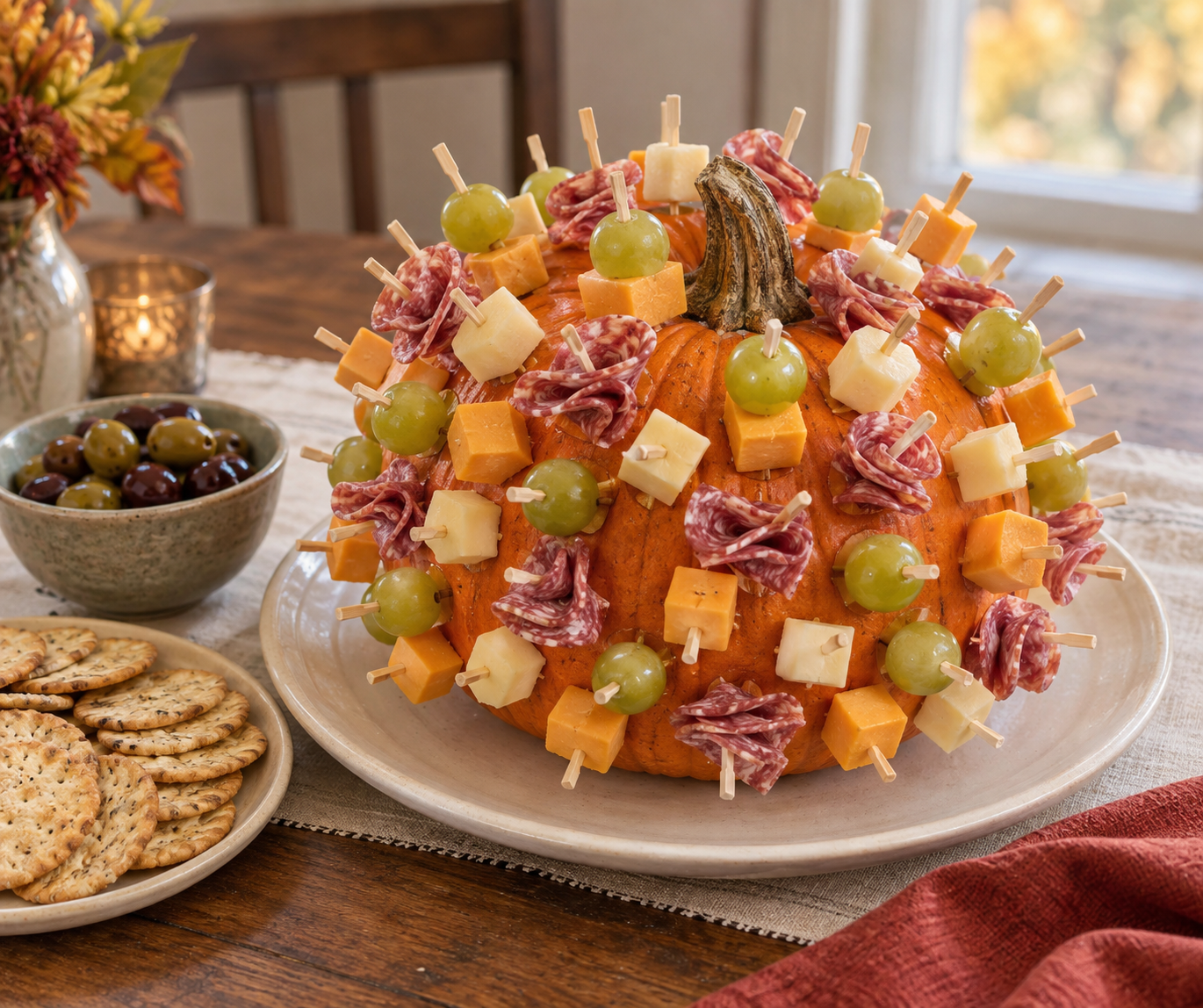
A pumpkin covered in cheese, salami, and grapes is exactly the kind of fall centerpiece that earns its place on the table. It looks festive, gives everyone something to nibble, and saves you from arranging an enormous board before people arrive.
The idea is simple: use a small, clean pumpkin as the base, add bite-size snacks on sturdy cocktail picks, and serve crackers alongside. You do not carve it, cook it, or turn anything into pumpkin spice. The pumpkin provides the shape; the snacks do the rest.
The inspiration here is the pumpkin appetizer in the World Market social post shown in the supplied screenshot. This is our own suggested assembly guide, with original AI-generated illustrations—not a reproduction of that post’s recipe or a kitchen-tested result.
Start small: the pumpkin is a centerpiece, not the whole buffet
Choose a squat grocery-store sugar or pie pumpkin that sits flat without wobbling. Around 6–8 inches across is a useful starting point. A giant carving pumpkin takes far more food to cover and becomes awkward to move once the picks are in.
Set it on a sturdy platter wider than its base. Guests should have room to reach for a bite without knocking into a bowl or tipping the pumpkin. Keep the stem visible: that little detail makes the whole thing read as a pumpkin rather than a mysterious ball of cheese.
For a first attempt, allow about 30–45 minutes for washing, chopping, and assembly. That is a planning estimate; a hard rind or elaborate arrangement can take longer. Have everything ready before you take the chilled ingredients out.
Your shopping list for 6–8 snackers
These quantities are a starting point for a light appetizer with crackers, especially if other food is coming. Pumpkin sizes and appetites vary, so keep any extra ingredients chilled for a separate refill plate.
- 1 small, unpainted sugar or pie pumpkin, firm and free of soft spots, mold, or cracks.
- 8 ounces orange cheddar, cut into roughly ¾-inch cubes.
- 8 ounces gouda or Monterey Jack, cut into similar cubes.
- 6–8 ounces ready-to-eat sliced salami, small slices that fold easily.
- About 2 cups seedless grapes, washed and dried well.
- 1 box of crackers, served separately so they stay crisp.
- Optional: a small bowl of pitted olives or drained cornichons.
You will also need a broad platter, a cutting board, a knife for the cheese, and a package of sturdy food-safe cocktail picks. Choose ones with enough length for the food, a small exposed handle, and an end that anchors in the pumpkin.
Two cheeses, one meat, and one fruit are plenty. Orange cheddar, pale cheese, and green grapes already give you the color contrast.
Wash the pumpkin before you build
Use a fresh food pumpkin, not one that has been painted, glittered, or treated as a craft decoration. Wash it under running water, scrub the firm rind with a clean produce brush, and dry it thoroughly. Wash the grapes too.
The FDA recommends washing produce before preparing it and using plain running water rather than soap or detergent. The outside matters here because picks will pass through the rind. Start with clean hands, tools, and a clean work surface. FDA produce-cleaning guidance
Leave the pumpkin whole. There is no need to hollow it out, and an intact base is simpler to handle. Check its stability on the platter before adding food.
Build it in four easy passes
### 1. Cut and fold everything first
Cut the cheeses into pieces large enough to hold on a pick without splitting. Fold each small salami slice in half, then in half again if needed. Pat the grapes dry so they are pleasant to handle.
Keep most of the meat and cheese in the refrigerator and work with small amounts.
### 2. Try a few picks before committing
Thread a cheese cube, a folded salami slice, or a grape onto a pick, leaving a handle exposed. Start with one item per pick; add a second only if the pick has room and the combination stays secure.
Test a few around the pumpkin’s upper half. Push the pointed end into the rind with controlled pressure, keeping your other hand clear of its path. The food should sit close to the surface and the handle should remain easy to grasp.
If the rind is too hard for your picks, stop rather than forcing them or reaching for a knife to stab holes. Use the pumpkin as the centerpiece and arrange the prepared bites on the platter around it. You still get the fall look, with less fuss.
### 3. Work around the pumpkin
Alternate orange cheese, pale cheese, salami, and grapes as you move around the sides. Keep the lowest bites high enough that they do not scrape the table or get crushed against the platter.
Aim for a generous scattering with little glimpses of orange rind. Perfect rows are unnecessary. Small spaces also give fingers room to grasp each pick without touching neighboring food.
### 4. Put the crunchy extras beside it
Add a separate plate of crackers and, if you want them, a bowl of olives or cornichons. Keep juicy or oily extras in their bowls rather than tucking them into the pumpkin.
Set out small plates, napkins, and a little dish for used picks. Never put a used pick back into the centerpiece.
Make ahead by prepping the parts
Earlier that day, wash and dry the pumpkin and grapes, cube the cheese, and portion the salami. Refrigerate the perishable ingredients in separate covered containers. Leave the crackers sealed until serving.
Assemble close to the time guests arrive. If you assemble earlier, the whole food-covered pumpkin needs refrigerator space; check that it fits before you start. Do not leave it on the counter all afternoon as a decoration.
Keep the serving window short
Keep cold perishable foods at 40°F or below. If the meat and cheese are sitting out without temperature control, use a two-hour limit—or one hour when the temperature is above 90°F. Count preparation and serving time together. Discard perishable bites that exceed the limit; putting them back in the fridge does not reset the clock. FDA buffet-safety guidance
For a longer party, set out a smaller amount and bring out fresh chilled bites on a clean plate later. Avoid continually topping up the same display and losing track of how long the first pieces have been out.
For young children, serve an age-appropriate plate separately, with picks removed and foods cut appropriately. A centerpiece of sharp picks and whole grapes belongs under adult control.
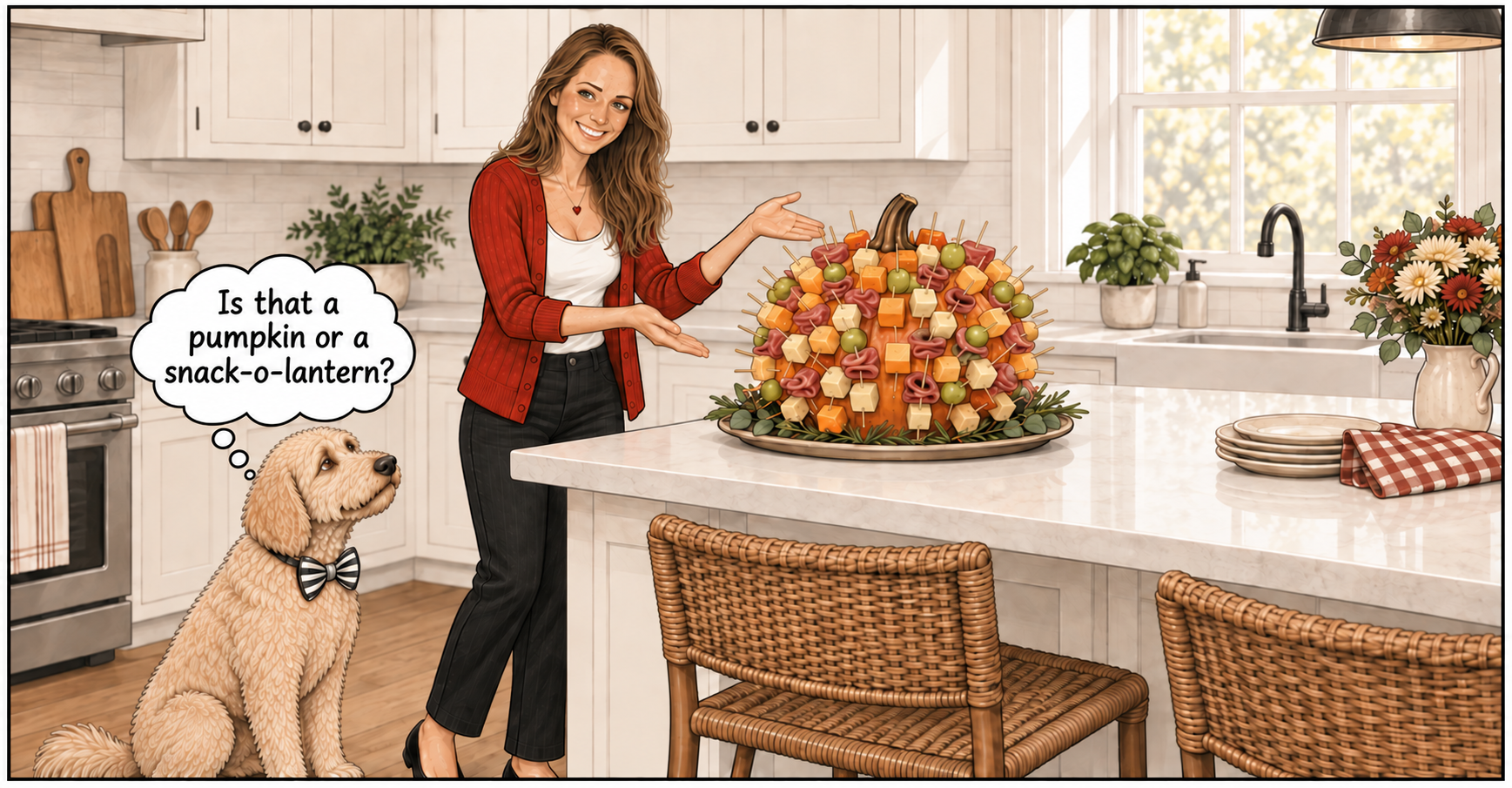
And keep it beyond Otto’s reach. Grapes and raisins can cause kidney damage in dogs; if your dog eats any, contact your veterinarian promptly. Collect dropped bites and used picks as you go. ASPCA foods to keep away from pets
Make the version your guests will actually eat
For a meat-free board, leave off the salami and add more cheese, with olives in a bowl. If you are serving vegetarians, check the cheeses’ labels for suitable rennet. For mixed dietary needs or allergies, keep a clearly identified separate plate and utensils rather than trying to make one shared pumpkin work for everyone.
You can also cover just the front and sides if the pumpkin will sit against a wall.
The best stopping point is when it looks inviting and people can easily pull off a snack. Add the crackers, put out the plates, and let the centerpiece do its second job.